
Transforming Website Traffic into Sales: How AI Automates Lead Capture and Boosts Conversion Rates
Learn how AI transforms website traffic into sales with proven lead generation and conversion rate optimization strategies. Discover how to capture quality leads, optimize your funnel, and turn visitors into loyal customers using AI-powered tools and data-driven tactics.
4/23/20267 min read
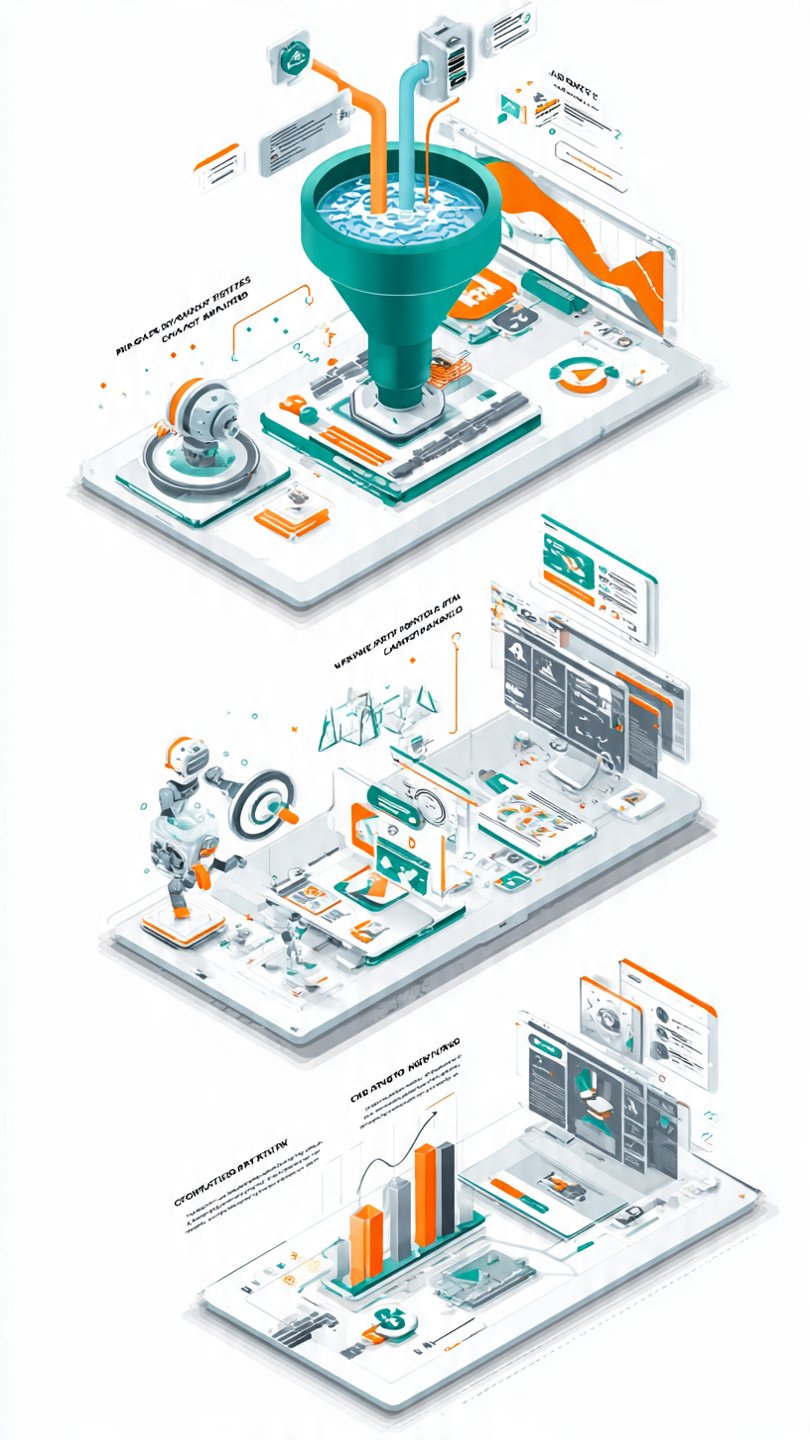
Understanding Lead Generation and Conversion Rates
Lead generation and conversion rate optimization (CRO) are critical elements in the sales funnel, both playing vital roles in a business's ability to transform website traffic into sales. Lead generation refers to the process of identifying and attracting potential customers—known as leads—who exhibit interest in a product or service. This process not only involves gathering contact information but also nurturing these leads until they are ready to make a purchase. On the other hand, conversion rate optimization focuses on improving the effectiveness of a website or landing page in converting visitors into leads or customers. This can encompass various strategies, from fine-tuning website design to enhancing the clarity of value propositions.
The importance of these two concepts cannot be overstated, as they have a direct impact on a business's sales outcomes. An efficient lead generation strategy ensures a steady flow of potential customers, which subsequently increases the opportunity for conversions. Higher conversion rates indicate that a business is effectively closing sales, thereby maximizing return on investment (ROI) on marketing efforts. When both lead generation and CRO are in harmony, companies are more likely to experience sustainable growth over time.
Despite their significance, many businesses face challenges in their pursuit of effective lead generation and conversion rate optimization. Common obstacles include identifying the right target audience, crafting compelling offers, and leveraging data analytics to better understand consumer behavior. Additionally, competition in digital marketing has intensified, necessitating innovative approaches and the use of technology to harness insights that can facilitate successful lead conversion. The interdependence of lead generation and CRO underscores the need for businesses to strategically address these challenges to maximize their potential for sales success.
Analyzing Traffic Patterns and Visitor Behavior
Understanding website traffic patterns and visitor behavior is essential for improving conversion rates and enhancing lead generation strategies. By analyzing these aspects, businesses can identify potential conversion issues that may be inhibiting sales. Data collection begins with traffic analysis tools, which help understand where visitors are coming from, the pages they spend time on, and their overall engagement on the site.
Utilizing tools such as Google Analytics provides insights into visitor demographics, revealing critical information such as age, gender, interests, and geographic locations. These insights can inform targeted marketing strategies that cater to the preferences of specific audience segments. Additionally, heatmaps and session recording software allow businesses to visualize how users interact with their website, highlighting any bottlenecks or areas that require optimization.
Moreover, analyzing visitor behavior entails tracking user journeys through the site. By understanding which paths lead to successful conversions and which ones drop off, businesses can pinpoint friction points in the user experience. For instance, if data shows a significant number of visitors exit the checkout page, it may indicate issues with the process that need addressing. Tools like A/B testing can also be deployed to experiment with different layouts or offers, revealing which variations yield higher conversion rates.
The integration of AI and machine learning further enhances the analysis of traffic patterns and visitor behavior. These advanced algorithms can process large sets of data to identify trends and anomalies that might go unnoticed through manual analysis. AI-driven insights empower marketers to predict potential conversion issues and proactively address them, ultimately facilitating a smoother user experience and improved sales outcomes.
The Limitations of Traditional Lead Generation Techniques
Traditional lead generation techniques often focus heavily on increasing website traffic as a primary metric for success. However, this approach can be misleading, as simply driving more visitors to a site does not guarantee higher conversion rates. A common misconception is that higher traffic directly correlates to a profitable outcome, but conversion optimization requires a more comprehensive strategy.
One significant limitation of traditional methods is the lack of personalization in outreach efforts. Many organizations rely on generic marketing campaigns that fail to consider the unique needs and preferences of potential customers. This broad-brush strategy can result in high bounce rates and low engagement levels, as visitors do not feel a connective relevance with the content presented to them.
Furthermore, traditional lead generation techniques often overlook the importance of understanding user behavior. Driving traffic with ads or promotional tactics can attract a vast audience; however, without analyzing behavioral data, businesses may struggle to identify key factors influencing users' decision-making processes. For instance, insights into how users navigate a site or what content compels them can significantly inform more effective strategies for conversion rate optimization.
Another limitation lies in the singular focus on qualitative metrics without integrating quantitative data. High traffic numbers might appear impressive at first glance, but if they do not translate into leads or sales, the return on investment (ROI) on those marketing strategies can be disappointing. As such, businesses must evolve their lead generation techniques by embracing data-driven insights that facilitate a holistic understanding of customer behavior, ultimately fostering a path toward successfully converting visitors into loyal customers.
The Role of AI in Enhancing Lead Generation
Artificial Intelligence (AI) is rapidly transforming the landscape of lead generation, significantly improving the ability of businesses to identify and cultivate potential customers. By leveraging advanced technologies, organizations can streamline their lead generation processes and enhance the quality of the leads they generate. One of the primary applications of AI in this area is predictive analytics, which utilizes historical data and machine learning algorithms to forecast future customer behavior. This enables companies to prioritize their efforts towards leads with the highest likelihood of conversion, thus optimizing resource allocation.
Another noteworthy advancement facilitated by AI is the implementation of chatbots. These AI-driven tools engage visitors on websites instantaneously, providing real-time assistance and capturing valuable information. Chatbots enhance user experience by answering queries, guiding potential customers through their decision-making processes, and effectively collecting data that can be used for lead qualification. Consequently, they reduce the burden on human agents while ensuring that leads are nurtured without delay.
Moreover, AI enhances the personalization of content delivery. By analyzing user behaviors and preferences, AI algorithms can create tailored content that resonates with specific segments of the audience. This high level of customization not only piques interest but also fosters deeper connections between the brand and its prospects. Personalized experiences are recognized as more effective in nurturing leads than generic approaches, which often fail to convert effectively.
In summary, the integration of AI into lead generation processes presents a substantial opportunity for businesses to enhance their efficiency and effectiveness. Through the strategic application of predictive analytics, chatbots, and personalized content, organizations can gather and qualify leads more adeptly than traditional methods, paving the way for improved conversion rates and sales growth.
Using AI for Optimizing Conversion Rates
The integration of artificial intelligence (AI) into digital marketing strategies has become essential for businesses aiming to optimize their conversion rates. AI-driven tools offer a range of functionalities that can significantly enhance customer engagement and ultimately drive sales. One of the most effective strategies involves personalizing the customer experience based on data-driven insights.
Personalization is crucial in encouraging potential customers to complete their purchases. AI algorithms analyze user behavior, preferences, and historical data to tailor recommendations and content specifically to individual visitors. By dynamically changing website elements, such as product showcases or promotional messages based on user interests, companies can create a more engaging and relevant shopping experience that resonates with users, thus reducing bounce rates and increasing conversions.
Another powerful method in employing AI for conversion rate optimization is through dynamic pricing strategies. AI can analyze market trends, competitor pricing, and consumer demand in real time, allowing businesses to adjust their prices accordingly. This real-time adjustment capability ensures that pricing remains competitive while also maximizing profit margins. By presenting users with optimal pricing and offers that align with their perceived value, businesses can enhance the likelihood of purchase.
A/B testing is another area where AI excels, as it automates the process of analyzing the effectiveness of different marketing strategies. By running simultaneous tests on various website elements, such as call-to-action buttons, page layouts, or content types, AI can quickly identify which variations yield the highest conversion rates. This data-driven approach eliminates guesswork and allows marketers to make informed decisions that directly affect sales performance.
In conclusion, the smarter application of AI in marketing strategies—through personalized experiences, dynamic pricing, and systematic A/B testing—can significantly improve conversion rates. By leveraging these technologies, businesses can not only enhance customer engagement but also achieve higher sales outcomes.
Integrating AI solutions into a marketing strategy requires a systematic approach to ensure alignment with business objectives and effective utilization of resources. The first step in this process is to identify the specific challenges that AI can address within your marketing framework. By assessing areas such as lead generation, conversion rate optimization (CRO), and customer engagement, businesses can clarify how AI technologies can effectively contribute to their goals.
Once the challenges are identified, the next step is selecting the appropriate AI technologies. Businesses should consider tools that offer functionalities such as predictive analytics, chatbots for customer interaction, and personalized content generation. It is essential to evaluate tools that not only cater to current marketing needs but also have the scalability to adapt to evolving demands. Compatibility with existing systems is a crucial factor—ensuring that the selected tools can integrate seamlessly into the current digital infrastructure minimizes disruptions and fosters a smoother transition.
Equally important is training the marketing team to utilize these AI-driven solutions effectively. Providing comprehensive training programs can empower team members to interpret data insights, implement AI-generated recommendations, and engage in best practices for data-driven decision-making. Regular workshops and updates on AI advancements can encourage continuous learning and adaptation, keeping the marketing team abreast of the latest developments in technology.
Incorporating feedback from both the team and the end-users will assist in refining the use of AI tools over time. Businesses should regularly evaluate the impact of AI solutions on lead generation and CRO metrics to identify areas for improvement. This iterative process will help ensure that the integration of AI solutions is an ongoing journey rather than a one-time implementation.
Measuring Success: Metrics and KPIs for AI-Driven Lead Generation
In the realm of AI-powered lead generation, the measurement of success is pivotal for understanding the effectiveness of implemented strategies. By focusing on specific metrics and key performance indicators (KPIs), businesses can evaluate their AI initiatives in lead generation and conversion rate optimization. One of the primary metrics to monitor is the conversion rate, which reflects the percentage of leads that ultimately become paying customers. A higher conversion rate indicates that the AI-driven strategies are resonating well with potential customers, leading to successful transactions.
Another crucial KPI to consider is customer acquisition cost (CAC), which represents the total expense incurred to acquire a new customer. This metric assists businesses in measuring the efficiency of their lead generation efforts. By analyzing CAC alongside conversion rates, organizations can identify whether their investments in AI are yielding positive financial returns. Moreover, understanding how CAC changes over time can provide insights into the scalability and sustainability of AI initiatives.
Lead quality metrics are also essential within this framework. Assessing the quality of leads generated through AI systems helps businesses understand how well these leads fit their target demographic or ideal customer profile. High-quality leads are more likely to convert, so measuring attributes such as engagement levels, demographic alignment, and potential lifetime value can enhance the efficacy of lead generation efforts.
To foster continuous improvement, businesses should leverage data analysis techniques. This involves regularly reviewing performance metrics to identify trends, strengths, and weaknesses in their AI-driven processes. Through iterative testing and refinement, organizations can optimize their strategies to strengthen lead generation and maximize conversion rates over time. By systematically measuring success through these KPIs, companies can ensure their AI implementations are contributing effectively to their goals.