
Converting Traffic: Mastering Lead Generation and Conversion Rate Optimization
Master lead generation and conversion rate optimization to turn website visitors into loyal customers. Learn proven CRO strategies, funnel optimization, and data-driven tactics to boost sales and grow your business.
BUSINESS GROWTHSOCIAL MEDIAWEB DESIGNSEODIGITAL MARKETINGVIDEO MARKETING
4/23/20267 min read

The Importance of Converting Traffic
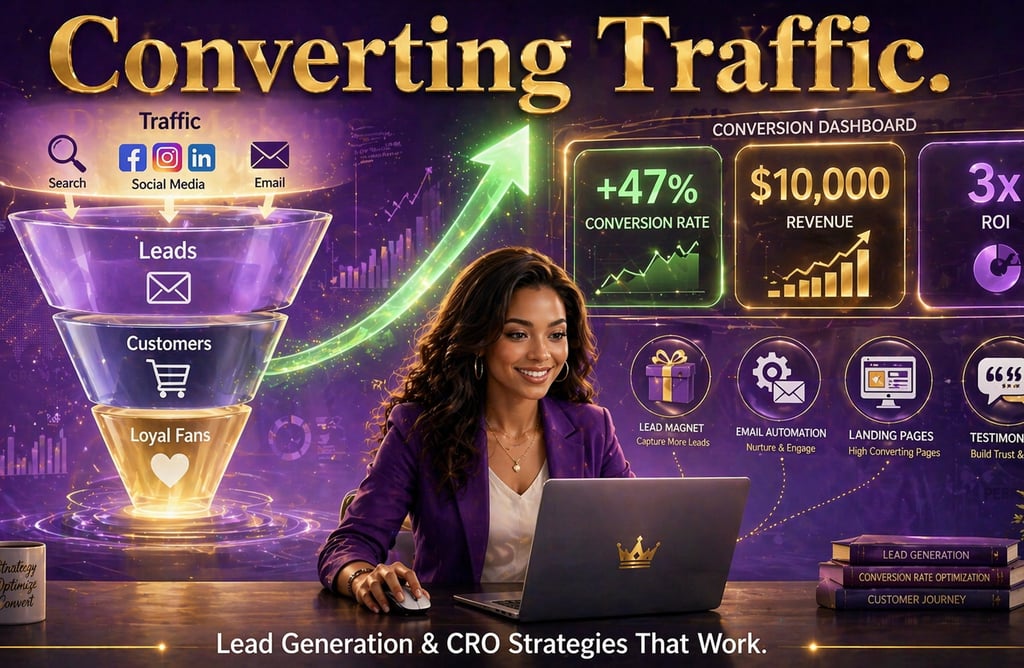
In the digital economy, businesses increasingly recognize that attracting visitors to their websites is only the first step in a multi-faceted sales process. However, it is equally critical to convert that traffic into tangible leads and sales. Conversion rate optimization (CRO) is, therefore, a focal point for commercial success. For many companies, the challenge of converting traffic is significant; statistics indicate that approximately 40% of organizations label this as their foremost website challenge. This statistic underscores the necessity for businesses to prioritize conversion strategies alongside their traffic generation efforts.
Converting traffic is not merely a quantitative measure of success. The economic implications are profound; enhanced conversion rates translate directly into increased revenue, improved return on investment (ROI), and stronger customer relationships. When businesses succeed in converting their website visitors effectively, they can cultivate a sustainable growth trajectory. Factors such as user experience, website design, and effective calls-to-action are critical components driving conversion rates. When optimized efficiently, these elements contribute to a cohesive pathway that guides potential customers from mere browsing to making a purchasing decision.
Moreover, businesses must understand that the online marketplace is ever-evolving, requiring continuous adaptation in strategies to enhance conversion. Exploring tools such as A/B testing and customer feedback can provide valuable insights into what resonates with visitors, ultimately informing decisions that improve CRO. This empirical approach to lead generation and conversion is essential for remaining competitive in today's digital landscape. As such, effective conversion strategies directly support a company’s bottom line, making it imperative for organizations to strike a balance between attracting traffic and converting that traffic into meaningful engagements.
Identifying Points of Friction
In the realm of lead generation and conversion rate optimization, understanding the points of friction on your website is crucial. A friction audit entails examining your website for elements that may deter potential leads from completing desired actions, ultimately impacting conversions. The process begins with identifying specific areas where visitors may encounter difficulties or confusion.
One primary element to assess is page loading speed. Slow loading pages can significantly affect user experience, leading to higher bounce rates. Studies indicate that a mere one-second delay in loading time can result in a 7% reduction in conversions. Therefore, optimizing images, leveraging browser caching, and minimizing HTTP requests are effective strategies to ensure faster loading times.
Another common point of friction resides in the checkout process. Statistics highlight that 69% of online shopping carts are abandoned due to complicated procedures. Simplifying these processes by reducing the number of required fields, offering guest checkout options, or integrating auto-fill features can lead to improved conversion rates. Engaging user-friendly interfaces not only enhance the shopping experience but also build trust among users.
Additionally, the effectiveness of calls to action (CTAs) cannot be overlooked. Weak or unclear CTAs can hinder users from taking the next necessary steps toward conversion. To address this, businesses should ensure that CTAs stand out visually and use persuasive, action-oriented language. Test various placements and wording for CTAs to identify what resonates best with your audience.
Ultimately, conducting a thorough friction audit empowers businesses to pinpoint and rectify barriers within their user journey. By optimizing page load speeds, simplifying checkout processes, and enhancing the effectiveness of CTAs, businesses can significantly improve their conversion rates, transforming visitors into leads.
Creating Powerful Lead Magnets
In the realm of digital marketing, lead generation is essential for converting site visitors into potential customers. One effective strategy for enhancing lead generation is the deployment of targeted lead magnets. Unlike generic forms that often fail to capture the interest of potential leads, a well-designed lead magnet resonates with a specific audience, driving them to willingly provide their contact information.
Targeted lead magnets provide value and entice users by addressing their unique needs or pain points. For instance, offering a "free AI audit" can attract businesses looking to optimize their artificial intelligence implementations. This lead magnet not only positions the business as an industry expert but also creates a bridge of trust with the users. By addressing a specific concern, it encourages potential leads to share their email details in exchange for a valuable service.
Another effective lead magnet could be a "cost calculator" tailored for a particular audience. For example, if one offers a tool that helps potential clients estimate the costs involved in utilizing certain services, it becomes a practical solution that drives engagement. Users are often keenly interested in understanding their financial commitments, and providing a straightforward means to calculate expenses aligns perfectly with their needs.
Ultimately, the success of a lead magnet hinges on its relevance and perceived value. By focusing on the interests and requirements of the target audience, businesses can design lead magnets that not only attract leads but also enhance the overall user experience on their platforms. Engaging potential customers through tailored offerings is a key strategy in mastering lead generation and optimizing conversion rates, paving the way for long-term relationships and increased sales.
The Need for Authentic Content
In today's digital landscape, authenticity has become a fundamental criterion for consumers when evaluating content. Recent surveys indicate that a significant 55% of customers express discomfort with AI-generated content. This statistic highlights a growing sentiment that, while technology can enhance efficiency, it often lacks the genuine human touch that resonates more profoundly with audiences. The demand for authentic content necessitates a careful balancing act between leveraging artificial intelligence and maintaining a distinct human voice.
Authenticity in content creation not only fosters trust among consumers but also enhances engagement and brand loyalty. A human-centric approach in content development allows brands to reflect their values, share genuine stories, and connect on a personal level with their audience. This is particularly relevant in the context of lead generation and conversion, where establishing a rapport can lead to higher engagement rates and improved conversion outcomes.
To effectively blend the efficiencies of AI with the authenticity that consumers crave, businesses might consider employing AI tools for data analysis and content optimization, while ensuring that the final output is refined and enriched by human insights. This collaborative approach can help maintain the tone and voice that represent the brand’s values, thus creating content that is both effective and authentic. As companies strive to improve conversion rates, it is crucial to prioritize authentic content that resonates with consumers, fostering a trustworthy relationship that encourages engagement and ultimately drives conversions.
Balancing AI and Human Touch
As businesses increasingly integrate artificial intelligence (AI) tools into their content creation processes, it becomes essential to strike a balance between automation and the human touch. While AI can streamline workflows, generate ideas, and analyze trends, retaining an authentic voice is crucial for engaging audiences and fostering trust. To achieve this delicate equilibrium, organizations should adopt a multifaceted strategy.
Firstly, businesses should leverage AI for data-driven insights that inform content strategy. By analyzing audience behavior, preferences, and engagement metrics, AI can help identify trending topics and optimize content distribution channels. However, relying solely on algorithm-generated content may lead to a generic voice. Thus, it is vital to infuse personal narratives, brand stories, and customer experiences to enhance relatability and authenticity.
Secondly, utilizing AI-generated drafts is an effective way to maintain consistency and efficiency in content creation. However, human editors must review and refine these drafts to ensure that they resonate with the target audience. This collaboration can blend the efficiency of AI with the creativity and intuition of human writers, ultimately enriching the finalized content.
Moreover, engaging with the audience in a personal manner can reinforce the human element. Businesses should encourage user-generated content, respond to comments, and actively seek feedback, which not only fosters deeper connections but also provides valuable insights into customer sentiments. Incorporating these elements can help businesses maintain engagement while retaining warmth and authenticity.
In conclusion, balancing AI and the human touch in content creation requires strategic integration. By leveraging AI for insights and efficiency while preserving a genuine voice through human engagement, businesses can enhance their lead generation efforts and improve conversion rates effectively.
Measuring Conversion Success
In the pursuit of enhancing conversion rates, businesses must implement an effective measurement system that utilizes key performance indicators (KPIs) and metrics to evaluate the success of their conversion strategies. Understanding these metrics is paramount for data-driven decision-making and ultimately achieving improved lead generation.
One of the most critical metrics is the conversion rate. This metric reflects the percentage of users who take a desired action on a website, such as filling out a form or making a purchase. A higher conversion rate indicates that the website and its marketing strategies are effectively persuading visitors to engage. Companies should monitor this metric regularly to identify trends and areas for improvement.
Another essential measure is the bounce rate, which signifies the percentage of visitors who leave a website after viewing only a single page. A high bounce rate may suggest that the landing pages are not engaging enough or that the content does not meet visitor expectations. By analyzing this data, businesses can make informed adjustments to enhance user experience and encourage deeper exploration of their offerings.
Moreover, customer feedback plays a crucial role in assessing conversion success. Direct insights from customers about their experiences can highlight potential roadblocks or areas that require attention. Tools such as surveys, interviews, and user testing can reveal valuable information that quantitative data alone may overlook.
Incorporating these metrics—conversion rates, bounce rates, and customer feedback—into a comprehensive measurement strategy allows businesses to evaluate the effectiveness of their conversion tactics continually. By understanding and acting on these indicators, organizations can refine their lead generation efforts and optimize their pathways to conversion.
Action Steps for Effective Conversion Optimization
To initiate effective conversion optimization, companies should start by analyzing their current traffic to identify areas of improvement. Utilizing analytics tools such as Google Analytics allows businesses to gain insights into user behavior, bounce rates, and conversion funnels. By understanding which pages are underperforming, organizations can prioritize their optimization efforts.
Next, companies should focus on ensuring that their landing pages are highly targeted and relevant to the ads or links that direct traffic their way. Each landing page should present a clear value proposition, compelling headlines, and content tailored to the specific audience’s needs. A/B testing different elements, like call-to-action buttons, images, and copy, can provide valuable data on what resonates best with visitors.
Moreover, it's beneficial to streamline the conversion process itself. This can involve minimizing the number of fields in forms, reducing distractions on landing pages, and ensuring that the overall user experience is intuitive. User feedback and usability testing can assist in identifying pain points that may hinder conversion rates.
Additionally, implementing retargeting strategies can help in capturing potential leads that did not convert during their initial visit. Display ads targeting these users can gently guide them back to the website, increasing the chances of conversion.
Furthermore, optimizing for mobile users is imperative in today’s digital landscape. Ensuring that websites are mobile-friendly can significantly boost conversions, as more users access sites through their smartphones. Utilizing responsive design and fast loading times will cater to this growing audience.
In conclusion, by systematically analyzing traffic, optimizing landing pages, simplifying conversion processes, utilizing retargeting, and focusing on mobile optimization, companies can enhance their lead generation efforts while significantly improving their conversion rates. These concrete steps will allow businesses to make structured improvements that are essential for maximizing the impact of their marketing strategies.